1. Initial consultation
We start with a conversation, ideally in the room the piece will live in. We talk through how it will actually be used — daily family dinners versus occasional entertaining, a boardroom that needs to seat twelve versus one that needs to seat six comfortably with room to spread out drawings — and set a realistic budget range before any design work begins.
2. Design & shop drawings
Concept sketches are refined into full shop drawings: every joint, reveal, hardware location, and finish specified to the sixteenth of an inch. For case goods this includes a cut list; for tables it includes the breadboard-end or apron allowance sized to the specific species and expected seasonal humidity swing at the piece’s final location.
3. Material selection & sourcing
We choose species against the piece’s real wear and stability requirements — a tabletop that will take daily contact is a different conversation than a display cabinet — and hand-select boards at the sawmill or from our own kiln-dried stock for grain and color match. Wide panels are laid out and approved by the client before a single board is cut to length.
4. Joinery & construction
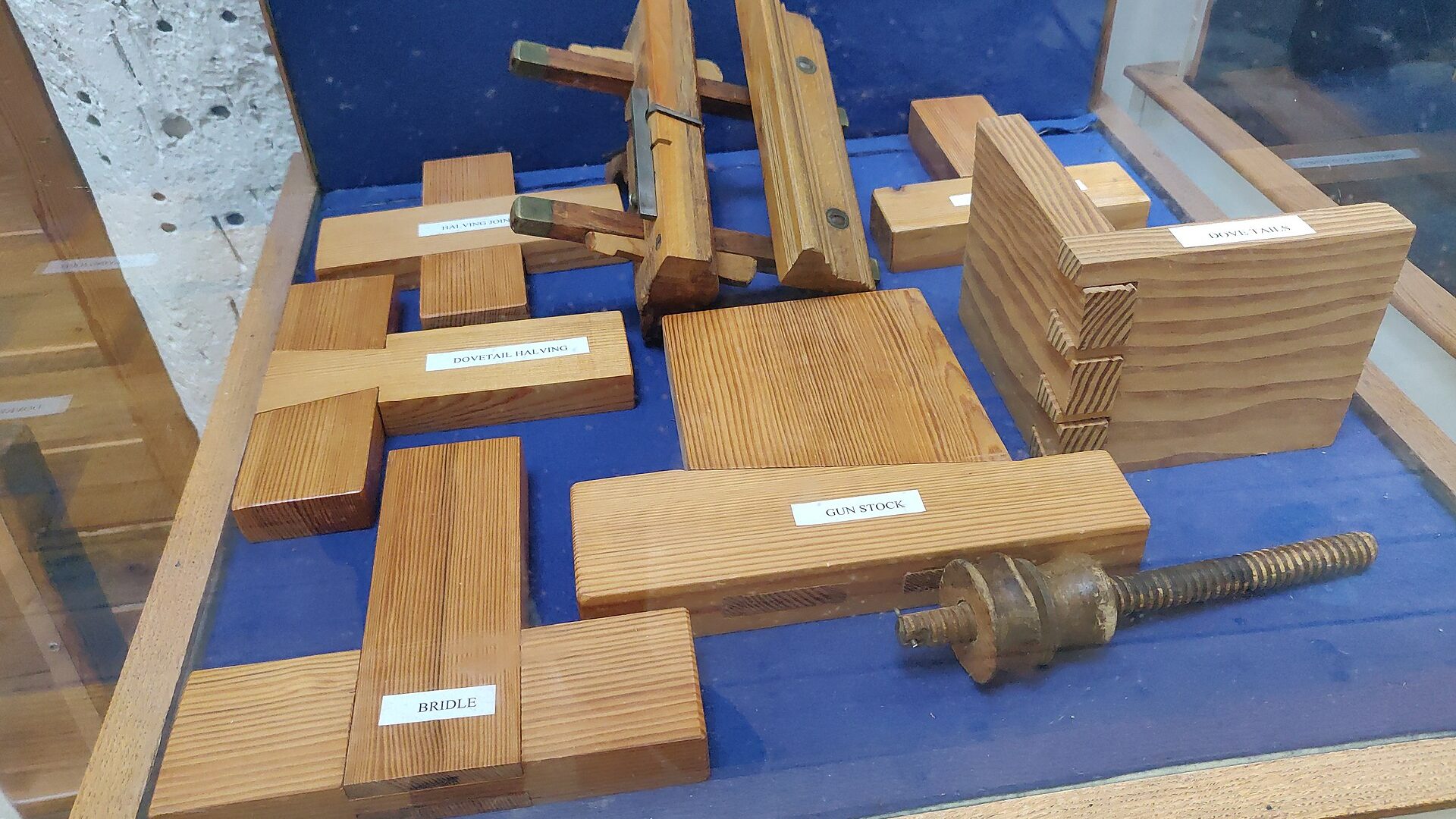
Mortise-and-tenon, dovetail, sliding dovetail, and breadboard joinery are cut by hand and machine in our own shop. Every joint is sized to let the wood move rather than fight it — a fixed tenon shoulder with a slotted, unglued pin is standard practice on any piece crossing the grain of a wide panel.
5. Finishing
Finish is chosen for how the piece will actually be used: hand-rubbed oil for a table that will be touched daily and re-oiled easily, catalyzed conversion varnish for a restaurant tabletop that needs real chemical and heat resistance, hard wax oil for case goods where a matte, repairable surface is preferred.
6. Delivery & install
Our own crew delivers and installs every piece — no third-party freight for anything leaving this shop — with a final walk-through and a care guide specific to the species delivered, including the expected seasonal movement range for that piece’s location.